 北海道放送
北海道放送
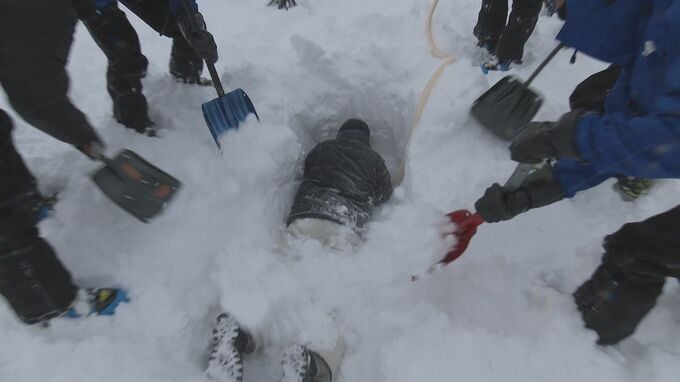
“It’s cold. It’s heavy. It’s completely dark—I can’t see anything.”
A reporter experienced what it feels like to be buried in an avalanche.
Hokkaido attracts skiers from around the world seeking its beautiful powder snow. In recent years in particular, off-piste skiing outside resort boundaries—known as “backcountry skiing,” where slopes are untouched and unmanaged—has become increasingly popular, especially among foreign tourists.【この記事の日本語版はこちら】
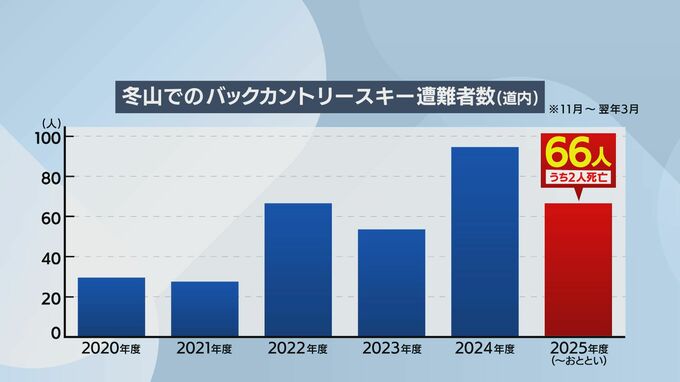
However, the number of people going missing while backcountry skiing has been rising over the past five years since 2020. This season alone, 66 people have gone missing, and two have lost their lives.
Why are people drawn to such dangerous places? And what happens when they face a life-threatening situation? We followed the mountain rescue team of the Hokkaido Prefectural Police, who work on the front lines of these rescues.
The “Deadly Slopes” That Lure Skiers
Backcountry terrain consists of unmanaged winter mountains outside controlled ski resort areas, where snow is not compacted. Avalanches can occur there at any time. According to rescue team members, slopes with angles between 35 and 45 degrees are particularly prone to avalanches.
Takayuki Sakuta, Inspector, Hokkaido Police Mountain Rescue Team:
“These slopes are ideal for skiing. For skiers, they’re incredibly tempting—you feel an irresistible urge to ski down them immediately.”
Ironically, the most dangerous places often appear the most attractive. But once caught in an avalanche and buried under snow, it is said that a person can lose their life in as little as five minutes.
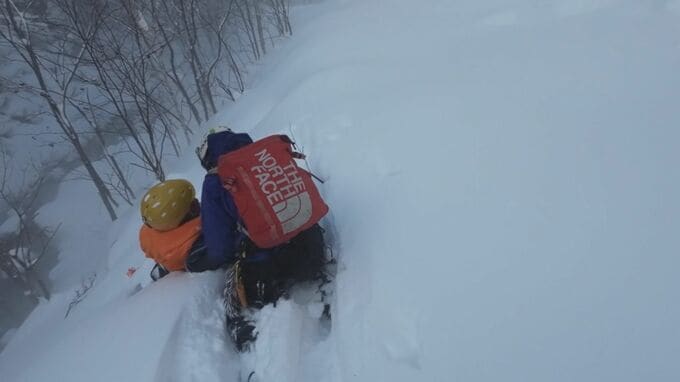
In January 2025, in Furano City, a 72-year-old American man lost visibility in a blizzard while backcountry skiing and became unable to move. In this race against time, the mountain rescue team rushed to the scene.